Above Ground Splash
Best Pool Heater for Above Ground Pool (Heat Pumps, Solar Covers & Gas Options)

Keeping an above-ground pool warm into fall (or even spring) requires the right equipment. In this guide we focus on “pool heater for above ground pool” – namely efficient heat pumps and solar pool covers. A quality heat pump (or heater) combined with a solar blanket will extend your swim season affordably. Below we explain how heat pumps work, how to size one for your pool, and how a solar cover can save heat and money. We’ll also share our top recommended products (with links to detailed review pages). This guide covers all types of pool heaters for above ground pools, including heat pumps, solar covers, propane heaters, and gas pool heaters.
Above-ground pools lose heat quickly, so pairing an efficient heat pump with a solar blanket is key. Heat pumps deliver roughly 4–5 units of heat for every unit of electricity, making them far more efficient than bare electric heaters. Solar bubble covers (the plastic mats) trap the sun’s energy and reduce overnight heat loss, often boosting water temp by 10–15°F and cutting heating costs by up to 70%
Heat Pump vs Propane vs Gas vs Solar Pool Heater: Which Is Best for Above Ground Pools?
Here’s a quick comparison of the most popular pool heater options for above ground pools:
Which Pool Heater Is Best for Above Ground Pools?
The best pool heater for an above ground pool depends on how quickly you want to heat the water, your budget, and how often you use your pool:
-
Heat pumps are best for energy efficiency and long-term savings
-
Propane heaters are best for fast, on-demand heating
-
Natural gas heaters are best for homes with a gas line and frequent use
-
Solar covers are best for reducing heat loss and lowering costs
For most above ground pool owners, a heat pump combined with a solar cover offers the best balance of performance and running cost.
Heat Pump Pool Heater (Best for Efficiency)
A heat pump pool heater for an above ground pool is the most energy-efficient way to maintain warm water throughout the season. It works by extracting heat from the air and transferring it into your pool.
Heat pumps take longer to heat water compared to gas heaters, but they cost significantly less to run over time. When paired with a solar cover, they become one of the most cost-effective heating solutions available.
👉 Best for: daily use, long swim seasons, lower electricity costs
Propane Pool Heater (Best for Fast Heating)
A propane pool heater is the fastest way to heat an above ground pool. It delivers powerful, on-demand heating, making it ideal for cooler climates or occasional pool use.
Unlike heat pumps, propane heaters can raise water temperature quickly, but they come with higher fuel costs. They are a great option if you want to heat your pool only when needed.
👉 Best for: quick heating, weekend use, colder weather
Natural Gas Pool Heater (Best for Convenience)
A natural gas pool heater works similarly to propane but connects directly to your home’s gas line. This makes it a convenient option for homeowners who already have natural gas available.
Natural gas heaters provide fast heating and consistent performance, especially for larger pools or frequent use, but they typically have higher operating costs than heat pumps.
👉 Best for: homes with gas lines, frequent heating, larger pools
Solar Cover for Above Ground Pool (Best for Cost Savings)
A solar cover for an above ground pool is the simplest and cheapest way to keep your pool warm. It doesn’t actively heat the water like a heater, but it traps heat and reduces evaporation.
Solar covers can significantly reduce heat loss overnight and improve the efficiency of any heating system, making them an essential add-on.
👉 Best for: reducing heat loss, lowering costs, improving efficiency
How Pool Heat Pumps Work
A pool heat pump is essentially an air-source heater: it extracts heat from the outdoor air and pumps it into the pool water. Because of this, a heat pump’s efficiency improves with warmer air. Even in mild weather (above ~50°F), modern inverter-driven units are quiet, draw low current, and can multiply the ambient heat by 4–6× (a Coefficient of Performance around 4–6).
-
Plug-and-Play vs. Hardwired: Above-ground pools often use smaller, plug-in heat pumps (110–120V) for easy installation. Larger baths can use 240V units.
-
Why Inverter Pumps: Variable-speed “inverter” models adjust output to match demand. They run quieter and use up to 50% less energy over a season compared to fixed-speed models.
In short, an air-source heat pump is usually the best overall heater for an above-ground pool in moderate climates. It costs more upfront than a simple electric heater, but costs much less to run. (In very cold climates or for instant heat-up, a gas heater can heat faster but at higher fuel cost.)
Sizing Your Pool Heater (BTU Guide)
Choosing the right size (BTU) is crucial. An undersized heater will run constantly and never reach your set temp, while an oversized one wastes money upfront. Use your pool volume (gallons) as the guide. A common rule from industry sources:

These are starting points. For example, one sizing table suggests 30,000–45,000 BTU for a 5,000–9,000 gal pool (electric heater or medium heat pump) and 90,000–120,000 BTU for 20,000–28,000 gal (larger inverter pump). Be sure to consider your climate: in cooler regions, lean toward the higher end of the range.
We provide a Heat Pump Sizing Chart (above) to match BTUs to your exact pool volume and climate zone. If your pool is small (like 5,000 gal), even a 15k–35k BTU unit can work, especially with a cover. Use our Pool Volume Calculator to size your heater correctly
Running Cost Calculator
To estimate electricity cost, use our Pool Heat Pump Cost Calculator (embedded below). It calculates daily cost based on BTU, Coefficient of Performance (COP), run hours, and your local $/kWh. Our static examples above show an 18,000 BTU pump costs only ~$2.10/day (at $0.20/kWh). Replacing the values in the calculator with your pool’s numbers will give a custom estimate. (Tip: running only during peak sun hours or when electricity is cheapest can further cut cost.)
Example: At $0.20/kWh, a 35,000 BTU inverter heat pump (COP 5.0) costs about $3.28 per day when running 8 hours – that’s under $100 per month! (The calculator also shows 30-day and 120-day season costs automatically.)
Solar Covers: Eco-Friendly Heat Retention
A solar pool cover (bubble blanket) is the easiest way to cut heating losses. Laid on the water surface, the cover acts like insulation and a greenhouse. Industry data shows solar covers can raise water temp by ~10–15°F and reduce evaporation (thus heat loss) by ~50%, which translates to roughly 70% lower heating costs.
In practice, that means fewer hours on the heater each day. For example, running your pump 6 hours with a cover might yield the same warmth as 8 hours without one. Especially in sunny regions, a solar cover is the most cost-effective heating addition. Even if it’s overcast, the cover still prevents nighttime heat loss.
Solar Cover Tips: Choose the correct size to cover your pool fully. Thicker covers (12–16 mil) retain more heat and last longer, but can be heavier. Consider a reel system for easy on/off. Always remove and store the cover on very hot or chlorinated days to extend its life.
Budget & Eco-Friendly Options
If budget is a concern, focus on solar solutions:
-
Solar Pool Blanket (Bubble Cover): As above, this $50–$150 plastic sheet can double heat transfer.
-
Solar Heating Mats or Panels: Black panels (like the Intex Solar Mat) heat water as it flows through, providing free warmth on sunny days. (They complement a pump and cover well.)
-
Cover-Up and Timing: Simply covering the pool at night and running the pump during peak sun or off-peak hours can cut bills.
Our article “Warm Up Your Pool (Eco-Friendly & Cheap Solutions)” explains that even a bubble “solar blanket” alone can boost temperatures and trap warmth. In clear weather, solar covers and mats combined can eliminate your heating bill entirely. For example, the Intex Solar Heating Mat uses free sunlight to warm water and often pays for itself over a season.
Solar-powered solutions are the most cost-effective ways to heat a pool, covering the pool and using a solar blanket can boost water temperature by several degrees without high cost. Combining a cover with a heat pump (instead of running the pump more hours) is a quick energy saver.
Top Recommended Heaters & Covers
Below are our top picks of heat pumps and solar covers for above-ground pools. Each links to a full review page:
Best Budget Heat Pump
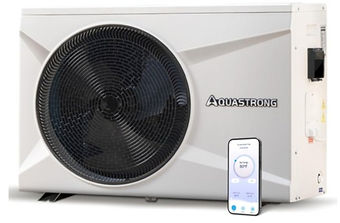
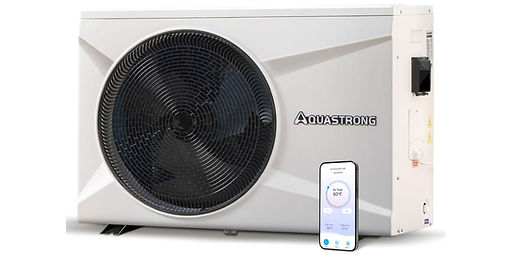
Aquastrong 35000 BTU Inverter Heat Pump
A compact, plug-in inverter heat pump ideal for most small–medium above-ground pools; quiet operation and modern controls make it a great first upgrade.
Recommended pool size: up to ~8,000–9,000 gallons.
Key points: inverter efficiency (low running cost), 120V plug and play convenience, Wi-Fi timer/controls.
_____________________________________________________________________________
Best for Larger Above-Ground Pools
Aquastrong 55000 BTU Inverter Heat Pump
Step up to this higher-capacity Aquastrong if you want faster warm-up and better performance in cooler nights.
Recommended pool size: ~8,000–15,000 gallons (medium → large above-ground pools).
Key points: high BTU output for faster heating, inverter operation for steady efficiency, sturdy cabinet that handles extended use.
_______________________________________________________________________________
Best for Cold Climates / Large Pools
DR. Heater DR-900HP — 90,000 BTU Inverter Heat Pump
High output inverter unit that brings fast, efficient heating to very large above-ground pools or cool climates.
Recommended pool size: ~12,000–20,000+ gallons (or for owners who need rapid heating).
Key points: 90k BTU capacity, advanced inverter efficiency (better COP), Wi-Fi and smart control options.
_______________________________________________________________________________
Best Cheap Heat Retention
The most cost-effective way to hold heat — reduces evaporation and can raise daytime temperature several degrees.
Recommended pool size: pick the cover that matches your pool footprint exactly (round or rectangular).
Key points: inexpensive, reduces evaporation & chemical loss, thickness options (8–16 mil) affect durability and heat retention.
______________________________________________________________________________
Best Free-Sun Supplemental Heating
A low-cost, pump-powered solar mat that adds degrees for free on sunny days — use multiples for larger pools.
Recommended pool size: great as a supplement for small → medium pools (combine units for bigger volumes).
Key points: zero electricity for heating (uses pump flow), easy install, ideal to pair with a heat pump or cover.
____________________________________________________________________________
Fast Heat: Propane & Gas Heaters
Quick note to readers: Propane and natural gas heaters give rapid heat increases but cost more per hour. Recommend for owners who need on-demand warmth or have existing fuel hookups.
Best Portable Propane Heater
Hayward Universal H-Series 150,000 BTU Propane Pool Heater
Reliable on-demand heating using propane tanks — great for weekend warmups and pools that need fast temp increases.
Recommended pool size: ~5,000–15,000 gallons depending on BTU variant.
Key points: instant heat (fast temp rise), works with standard propane tanks, safety features + pilot/thermostat control.
_____________________________________________________________________________
Best Hard-Plumbed Gas Heater
Hayward Universal H-Series 150,000 BTU — Natural Gas Pool Heater
Hard-plumbed natural gas heater provides strong, continuous heat when you already have a gas line—fast and reliable.
Recommended pool size: medium → very large pools (select BTU size for volume).
Key points: rapid temperature recovery, continuous high output, requires gas hookup and ventilation/permits.
____________________________________________________________________________
Frequently Asked Questions
Q: How much can a solar cover lower my heater runtime?
A: In practice, a good pool blanket can cut heat loss by around 50–70%, which typically means running your heater 20–40% fewer hours. Every climate and pool is different, but even on cloudy nights a cover will retain most of the day’s gained warmth.
Q: What electricity rate should I use for cost estimates?
A: Use your local residential electricity rate (in $/kWh) from your utility bill. If you’re not sure, start with an average of $0.15–$0.25/kWh. (Our cost examples above used $0.20/kWh as a sample.) For precise budgeting, enter your exact rate into the calculator.
Q: How long should I run the heater each day?
A: That depends on your pool size, pump flow, and desired temp. A common approach is to run the heater 8 hours/day and check if the target temperature is reached. If not, you can increase hours or improve insulation (cover, wrap pumps). Many users run during the warmest part of the day. If you use a solar cover, you may only need 4–6 hours.
Q: How thick of a solar cover do I need?
A: We recommend a 12–16 mil bubble cover for above-ground pools. Thicker covers retain heat better and last longer. (Standard covers are often 8 mil, but 12 mil or above provide noticeably more warmth.) Thinner covers are easier to handle but wear out faster.
Related Guides: Plan, Size & Upgrade Your Pool Setup
If you're still deciding on the best way to heat your pool, these guides will help you choose the right setup and avoid costly mistakes:
Pool Volume Calculator
Not sure how many gallons your pool holds? Use our calculator to determine your pool volume — essential for choosing the right propane pool heater, heat pump, or filtration system.
Warm Up Your Pool (Eco-Friendly & Cheap Solutions)
Looking for cheaper ways to heat your pool? Discover simple, budget-friendly methods like solar covers and passive heating techniques to raise your water temperature without high running costs.
👉 Read the Eco-Friendly Heating Guide
Filtration & Pumps Guide
Learn how your pool circulation system impacts heating performance and water clarity. A properly sized pump and filter can improve heating efficiency and reduce overall energy costs.
👉 Explore Filtration & Pumps
Final Tip
The best results come from combining the right heater with proper sizing and a solar cover. Take a few minutes to explore the guides above — it can save you money and help you get the most out of your pool heating setup.