
Bestway Pool Ground Cloth Review: Is It Worth Buying?

Updated: Oct 25
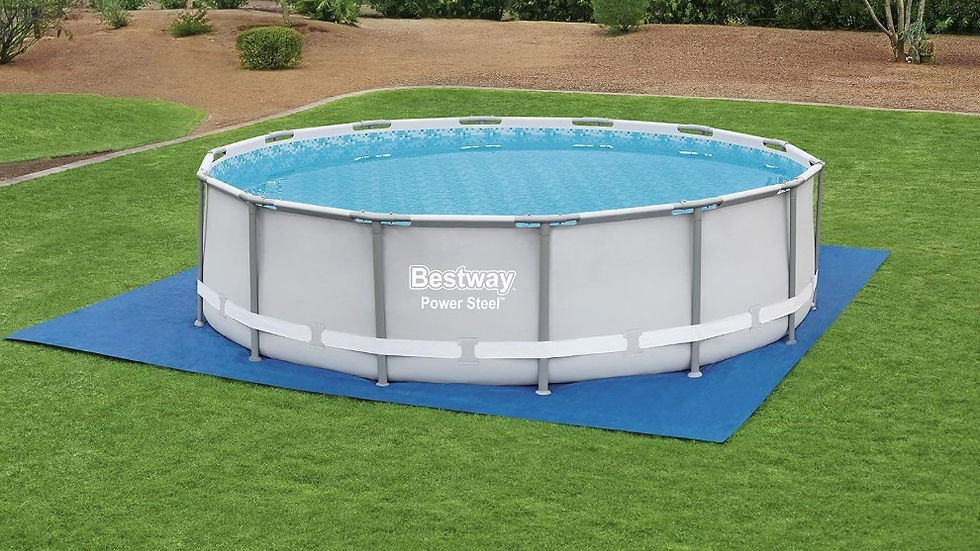
A ground cloth isn't the most exciting accessory you'll buy for your above-ground pool, but it's one of those inexpensive extras worth considering before you start filling thousands of gallons of water.
The Bestway pool ground cloth is designed to sit beneath your above-ground swimming pool, creating a protective barrier between the liner and the surface underneath. It's a simple, affordable way to add basic protection without investing in expensive pool flooring.
But how much protection does it actually provide? Is it thick enough for concrete? And is it worth buying if your pool already includes a ground cloth?
Let's look at what you're getting, which size you need and when it might be worth spending a little more on something thicker.
Quick Verdict: Is the Bestway Ground Cloth Worth It?
Yes, the Bestway Ground Cloth is worth considering if you need an affordable, lightweight protective layer beneath a small or medium above-ground pool.
It's easy to position, comes in several sizes and helps reduce direct contact between the liner and minor surface roughness.
However, it's important to keep expectations realistic.
This is a relatively thin protective sheet, not a padded liner protector. It won't make a hard pool floor noticeably softer, and it isn't thick enough to protect against sharp stones, exposed roots or badly prepared ground.
Best for: Pool owners who want basic liner protection without spending much money.
Who should skip it? Anyone looking for substantial cushioning or a more protective underlay for rough concrete.
Our verdict: For a properly prepared pool base, the Bestway Ground Cloth is a sensible budget option. If you're installing a larger pool or want something more substantial beneath the liner, it's worth comparing it with a dedicated geotextile pool liner pad.
What Is the Bestway Ground Cloth?
The Bestway Ground Cloth is a lightweight, blue protective sheet designed to go underneath an above-ground swimming pool.
Its main job is straightforward: provide a barrier between the pool liner and the prepared installation surface.
Instead of the underside of your pool sitting directly against the ground, the cloth helps reduce contact with minor surface imperfections and small amounts of fine debris that may remain after preparation.
It's commonly used with Bestway Fast Set, Steel Pro and Steel Pro MAX pools, although a correctly sized ground cloth can also be useful beneath other compatible above-ground pools.
The material is lightweight, folds away for storage and doesn't require specialist tools to install.
What makes it appealing is its simplicity. You don't need an elaborate installation process or expensive accessories. You just need the correct size and a properly prepared surface.

Bestway Ground Cloth: Key Specifications
Material: Flexible synthetic ground-sheet material (check the specification for your chosen variant).
Colour: Blue.
Design: Single-piece square ground cloth.
Common sizes: 9 × 9 ft, 11 × 11 ft, 13 × 13 ft and 16 × 16 ft.
Main purpose: Basic liner protection against direct ground contact and abrasion.
Installation: Positioned beneath the pool on a smooth, level, stable surface.
Cushioning: Minimal.
The ground cloth shouldn't be confused with Bestway's interlocking floor protector tiles or thicker foam flooring products. Those are different accessories designed to provide additional padding.
What Does the Bestway Ground Cloth Actually Protect Against?
The biggest benefit of a ground cloth is reducing unnecessary contact between your pool liner and the surface beneath it.
That might sound like a small thing, but once a pool is filled, the weight of the water presses the liner firmly against the base.

Reduces Direct Abrasion
Even after carefully preparing the ground, a few small particles or slightly rough areas can remain.
The Bestway Ground Cloth creates a layer between the liner and those minor imperfections, helping reduce rubbing against the underside of the vinyl.
It isn't puncture-proof, though. Sharp stones, exposed roots and protruding concrete edges should always be removed or repaired before installation.
Helps Keep the Underside of the Pool Cleaner
If you take your pool down at the end of summer, having a ground cloth underneath can make the process a little easier.
Instead of the liner sitting directly against soil or grass, it has a separate protective sheet underneath.
That doesn't mean the liner will come out perfectly clean or dry, but it helps separate the pool floor from the ground during the swimming season.
Provides a Basic Barrier Against Grass and Weeds
A ground cloth can help separate the liner from grass and other vegetation beneath the pool.
However, it's not a replacement for clearing the installation area.
Persistent weeds, roots and uneven vegetation can still cause problems, so the ground should be properly prepared before the cloth goes down.
What About Cushioning?
This is probably the biggest limitation.
Although the Bestway Ground Cloth creates a protective barrier, it offers very little cushioning.
If your pool is sitting on concrete, you'll still feel the firmness of the surface through the liner.
For a softer floor, you'd need to consider a suitable padded underlay, such as interlocking EVA foam mats, where the pool design can safely accommodate them.
We'll look at those alternatives further down the page.
What Size Pool Ground Cloth Do You Need?
Getting the size right matters more than you might think.
You want enough material to cover the area beneath the pool floor without leaving sections of the liner exposed.
Bestway offers several ground cloth sizes, with larger square sheets designed for larger round swimming pools.
These are common Bestway ground cloth sizes and their intended round-pool compatibility. Always check the dimensions of the particular cloth and pool you're purchasing, especially when comparing different Amazon listings.
If your pool falls between sizes, don't automatically choose the largest available cloth. Excess material can create folds, wrinkles or obstructions around the frame if it isn't positioned correctly.
Don't Forget the Pool's Supporting Legs
A common mistake is choosing a ground cloth based only on the advertised pool diameter.
Some above-ground pools have support legs or braces that extend beyond the swimming area.
For example, a 12-foot round pool may use a 13 × 13-foot cloth, but its full assembled footprint could extend farther than that.
The ground cloth itself isn't a structural support, so the important thing is making sure the entire pool, including its legs and braces, sits on a properly prepared, level foundation.
Measure the full assembled footprint before choosing your installation area.
Bestway Ground Cloth: Sizes and Current Amazon Prices
Bestway ground cloths come in several sizes, but not every option is easy to find on Amazon. We've selected two options for popular 12-foot and 15-foot round above-ground pools.
Compare their latest available Amazon prices below. If a price isn't displayed, you can check the current price directly on Amazon.
If you own a smaller pool, it's worth checking the correct size rather than purchasing a significantly larger ground cloth simply because it's easier to find.
And remember to check whether your pool already came with one. There's no need to buy another basic ground cloth if the original is still in good condition.
Can You Use a Bestway Ground Cloth on Concrete?
Yes, a suitable Bestway Ground Cloth can provide basic liner protection on a concrete surface.
However, concrete introduces a few considerations worth understanding before installation.
Even a smooth-looking patio can have rough patches, small cracks, raised joints or sharp particles that could damage a flexible vinyl liner.
A ground cloth helps reduce direct contact with the concrete, but it won't correct those problems.
The concrete should already be smooth, level, stable and suitable for the weight of the filled pool.
If the surface is rough, or you'd prefer more protection between the liner and the concrete, a thicker purpose-made liner pad may be a better option.
One product we particularly like for this purpose is the U.S. Pool Supply Ground Shield. It uses 220-gram nonwoven geotextile material, giving you a more substantial protective layer than a basic ground cloth.
If you're planning a concrete installation, we've covered the preparation requirements, protective underlays and foam flooring options in our detailed guide on installing an above-ground pool on concrete.
That guide also includes our interactive foam mat calculator if you're considering additional cushioning.
Bestway Ground Cloth vs a Thicker Pool Liner Pad
Is there any reason to spend more on a thicker liner pad instead of a basic ground cloth?
That depends on what you're trying to achieve.
Bestway Ground Cloth: A good budget option for a properly prepared, smooth installation surface. It provides basic separation and abrasion protection without adding noticeable thickness.
Geotextile Pool Liner Pad: A more substantial protective material that may be better suited to pool owners wanting additional liner protection. Products such as the U.S. Pool Supply Ground Shield use nonwoven fabric rather than a thin ground sheet.
Interlocking Foam Mats: If you're looking for a softer pool floor rather than basic liner protection, our preferred option is the BalanceFrom ½-inch EVA Foam Mats. They're available in several pack sizes and provide additional cushioning, although they won't suit every pool installation.
For a small seasonal pool installed on smooth, level ground, I wouldn't automatically spend extra on the thickest underlay available.
But if you're putting a larger pool on concrete or want more than basic protection, the extra cost of a dedicated liner pad may be worthwhile.
And if comfort is your main concern, suitable foam mats may make more sense than simply buying a thicker ground cloth.
The important thing is choosing a material that suits the installation rather than assuming thicker always means better.
How to Install the Bestway Ground Cloth Correctly
Installing the cloth itself is straightforward. Most of the work should happen before you unfold it.
Step 1: Prepare the Installation Area
Start by checking that the entire pool footprint is level and stable.
Remove grass, roots, stones, sticks and other debris that could create pressure points beneath the liner.
If you're installing on soil, the prepared area should be firm and compacted. On concrete, remove grit and check for rough or raised sections.
Don't use the ground cloth, sand or loose padding to hide an uneven foundation.
If you're starting from scratch, our guide to leveling the ground for an above-ground pool explains how to prepare the area properly.
Step 2: Unfold and Position the Cloth
Spread the ground cloth across the prepared surface.
Make sure it's centered beneath the planned pool location and lies as flat as possible.
Smooth out folds and wrinkles before moving on.
You don't want a section of material bunched up beneath the liner once the weight of the water is pressing down on it.
Step 3: Keep the Cloth in Place During Assembly
A lightweight ground cloth can move around while you're positioning the pool.
If necessary, temporarily secure the loose edges outside the pool footprint so the material stays flat while you work.
Keep stakes, stones and other temporary holding objects clear of the liner and supporting frame, and remove them before filling the pool.
Make sure the ground cloth hasn't shifted or folded over during assembly.
Step 4: Position the Pool and Assemble the Frame
Carefully lay out the pool liner and assemble the frame in the correct sequence.
Avoid dragging the vinyl across exposed concrete or rough ground.
Check that the cloth remains flat beneath the pool and hasn't folded over while you're positioning the liner.
The frame legs and supports must rest correctly on the prepared foundation, at their intended height relative to the pool floor.
Don't use loose pieces of foam, timber or blocks to compensate for an uneven surface.
Step 5: Check Everything Before Filling
Before adding a significant amount of water, check the ground cloth, liner and frame alignment one final time.
Once the pool begins filling, it becomes much harder to correct anything trapped underneath.
If the cloth needs trimming, do so before installation wherever possible. Never use a sharp blade close to a filled pool liner.
Taking a few extra minutes at this stage can save you a much more frustrating job later.
Bestway Ground Cloth: Pros and Cons
What We Like
Affordable protection: It's a straightforward way to add a barrier beneath the liner without spending a lot on pool flooring.
Easy to install: No specialist tools or complicated fitting process.
Available in several sizes: Suitable options are available for many popular small and medium round above-ground pools.
Lightweight and easy to store: Convenient for seasonal pools that are dismantled at the end of summer.
What Could Be Better
Very little cushioning: Don't expect the floor to feel noticeably softer.
Limited protection against sharp objects: Ground preparation is still essential.
Can wrinkle or shift: Careful positioning is important during assembly.
Inconsistent Amazon availability: Not every size is easy to find, and some smaller listings can be surprisingly expensive.
Not ideal for every installation: Larger pools, rough concrete and installations requiring more substantial liner protection may benefit from a different underlay.
Overall, its biggest strength is also its limitation: it's a simple, inexpensive protective layer rather than a complete pool flooring solution.
Who Should Buy the Bestway Ground Cloth?
I'd recommend it mainly to someone setting up a seasonal above-ground pool on a properly prepared surface.
If you own an 8-foot, 10-foot, 12-foot or 15-foot round Bestway pool and simply want an inexpensive layer between the liner and the ground, this is a sensible option.
It's also worth considering if the ground cloth supplied with your pool is damaged, missing or no longer suitable for reuse.
However, check what's already included with your pool before ordering.
There's little reason to buy a second basic ground cloth if your existing one is in good condition and already does the job.
Who Should Skip It?
I'd look at other options if you're installing a pool on rough concrete, want substantial cushioning or need a specially sized underlay for a large rectangular or oval pool.
In those situations, a dedicated geotextile liner pad or another suitable protective material may make more sense.
Also remember that a ground cloth won't repair an aging or damaged liner.
If your pool is already showing signs of wear, our guide on when to replace an above-ground pool liner explains when a repair is worth attempting and when replacement becomes the better choice.
How to Clean and Store Your Bestway Ground Cloth
If you dismantle your pool at the end of the season, the ground cloth can usually be cleaned and stored for reuse.
Remove loose dirt and debris, rinse the cloth with clean water and allow it to dry thoroughly.
Before folding it away, inspect it for tears, holes or sections that have become badly worn.
Store it in a clean, dry place away from sharp objects and unnecessary sunlight exposure.
If the material is badly damaged, replacing an inexpensive ground cloth is usually simpler than trying to repair several worn areas.
Final Verdict: Would We Recommend the Bestway Ground Cloth?
Yes, for the right pool and installation surface.
The Bestway pool ground cloth is a simple, budget-friendly accessory that provides basic protection beneath an above-ground pool liner. For pool owners who need an inexpensive protective layer rather than extra cushioning, it's a practical option worth considering.
It doesn't offer the cushioning of EVA foam or the more substantial barrier of a dedicated geotextile pad, but it doesn't need to.
For a small or medium seasonal pool on smooth, properly prepared ground, the Bestway Ground Cloth provides the basic protection most owners are looking for, without the expense of a thicker underlay.
Our advice would be to check whether your pool already includes a suitable ground cloth, choose the correct size if you need a replacement and spend most of your effort getting the foundation right.
A well-prepared base and a simple ground cloth will usually serve you better than an expensive underlay placed over poorly leveled ground.
Frequently Asked Questions
Do I need a ground cloth under a Bestway pool?
A ground cloth is a useful protective layer beneath many Bestway above-ground pools. It helps separate the liner from the prepared ground and reduces direct abrasion. Check whether your pool already includes one before buying a replacement.
What size ground cloth do I need for a 12-foot Bestway pool?
Bestway's 13 × 13-foot ground cloth (item 58002) is designed for round pools up to 12 feet in diameter. Check the dimensions of your exact pool model and allow enough room for its supporting legs.
Can I use a Bestway ground cloth on concrete?
Yes, a suitable Bestway ground cloth can provide basic protection on smooth, level concrete. However, the concrete must already be suitable for the pool, and rough patches, sharp edges or raised joints should be corrected before installation.
Will the Bestway Ground Cloth prevent punctures?
It can help reduce direct abrasion and contact with minor surface imperfections, but it isn't puncture-proof. Sharp stones, exposed roots and other hazards should be removed before installing the pool.
Does the Bestway Ground Cloth make the pool floor softer?
Not noticeably. It's a thin protective sheet rather than a cushioned floor pad. For additional comfort, a suitable thicker underlay may be worth considering if the pool's floor and frame supports can safely accommodate it.
Can I put the Bestway Ground Cloth directly over grass?
The area should be properly prepared first. Remove vegetation, roots and debris, then create a firm, level supporting surface. A ground cloth alone won't prevent problems caused by grass, weeds or uneven ground.


Comments