
FOTING 1HP Pool Drain Pump Review for Above-Ground Pools

Sometimes a small pool cover pump is enough. Other times, you need something with a lot more power.
The FOTING 1HP Submersible Sump Pump is a high-flow utility pump designed for bigger water-removal jobs. It can be used for pool draining, flooded areas, ponds, hot tubs, window wells, and other situations where you need to move water quickly.
For above-ground pool owners, this is not the same type of product as a dedicated automatic pool cover pump. It is stronger, faster, and more general-purpose. That can be useful, but it also means you need to use it more carefully.
If you only need to remove light standing water from a winter cover, a siphon pump, manual cover pump, or automatic cover pump may be a better fit. But if you need a high-flow utility pump for larger draining jobs around the pool, the FOTING 1HP is worth a closer look.
In this review, I’ll explain what the FOTING 1HP pump does well, where it fits into an above-ground pool setup, when not to use it, and how it compares with smaller cover pump options.

Quick Verdict
The FOTING 1HP Submersible Sump Pump is worth considering if you need a powerful utility pump for larger water-removal jobs around your pool.
Its biggest strength is output. With a listed maximum flow rate of up to 4600 GPH and a 1HP motor, it is built for moving a lot more water than a basic siphon pump or compact manual cover pump.
It also includes multiple hose connection options, a 10 ft power cord, a removable bottom screen, thermoplastic housing, a carry handle, and thermal overload protection.
The limitation is that this is not a delicate, cover-specific pump. It is a high-flow utility pump. I would not make it the first choice for light standing water on a winter cover unless you are confident you can place it safely, manage the water flow, and avoid damaging the cover.
For ordinary cover water, choose a dedicated pool cover pump. For heavier draining jobs, the FOTING 1HP is the stronger option.
Best Short Answer
The FOTING 1HP Submersible Sump Pump is a powerful utility pump for moving larger amounts of water around a pool, basement, pond, or hot tub. It is best for heavier draining jobs, not light winter cover maintenance. Above-ground pool owners should treat it as a high-flow utility option rather than a dedicated pool cover pump.
FOTING 1HP Sump Pump Specs at a Glance
The FOTING 1HP is best viewed as a high-flow utility pump, not a small winter cover pump. It gives you much more water-moving power, but it also needs more care, monitoring, and sensible placement.

What Does the FOTING 1HP Sump Pump Do?
The FOTING 1HP pump is designed to move water quickly from one area to another.
For pool owners, that can include draining water from a pool, lowering water levels, removing water from a flooded area, emptying a hot tub, clearing water from a pond, or handling heavier water-removal jobs around the yard.
It can also be useful around a winter pool cover in some situations, but it is not the same as a dedicated cover pump.
A proper pool cover pump is usually designed to sit on top of a cover and remove standing water more gently. The FOTING is a stronger utility pump, so you should only use it on a cover if the cover can support it, the pump sits safely, and you are there to monitor the process.
For many above-ground pool owners, this is the “big job” pump rather than the everyday winter cover pump.
Who Is the FOTING 1HP Pump Best For?
The FOTING 1HP pump is best for pool owners who need faster, higher-volume water removal.
It is a good fit if:
You need to move a lot of water quickly.
You want a utility pump for pool draining and other household water jobs.
You need stronger flow than a siphon or compact cover pump.
You want multiple hose connection options.
You want a pump that can handle larger draining tasks.
You are comfortable monitoring an electric submersible pump.
You need a pump for more than just winter cover water.
This pump makes the most sense if you want one powerful water-removal tool for several jobs around the pool and home.
Who Should Skip It?
Skip the FOTING 1HP pump if you only need a gentle pump for light standing water on a winter cover.
You may be better with another option if:
You want automatic cover water removal.
You only deal with small puddles on the cover.
You do not want to monitor the pump.
You need a lightweight cover-specific pump.
Your winter cover is delicate or poorly supported.
You do not have a safe outdoor power setup.
You want a non-electric option.
You are mainly trying to remove leaves or debris.
For most everyday winter cover water, a dedicated pool cover pump is easier to recommend. The FOTING is better when the job is bigger.
Important: This Is a Utility Pump, Not a Dedicated Pool Cover Pump
This distinction matters.
The FOTING 1HP is powerful, but power is not always what you want on a winter cover. A heavy or high-flow utility pump can be too much if the cover is sagging badly, unsupported, or covered in debris.
If you use it near a winter cover, do it carefully:
Make sure the cover is properly installed.
Avoid placing the pump where it could drag or pull the cover.
Keep debris away from the intake.
Stay nearby while it runs.
Stop the pump before it runs dry.
Do not leave it unattended on a pool cover.
Do not leave it outside in freezing weather.
For regular winter cover maintenance, I would still prefer a dedicated cover pump. But for larger draining jobs, this pump has a place.
How to Use the FOTING 1HP Pump Around an Above-Ground Pool
The exact setup depends on the job, but the basic process is straightforward.
1. Decide whether this is the right pump for the job
Use the FOTING for larger water-removal jobs where stronger flow is useful.
For light water sitting on a winter cover, a dedicated cover pump may be safer and easier. For heavier water, pool draining, or utility use, the FOTING makes more sense.
2. Choose the right hose connection
The pump includes multiple hose connection options, including a 1-1/2 inch NPT discharge and garden hose adapter options.
Use the largest practical hose for better flow. A small garden hose can reduce performance compared with a larger discharge hose.

3. Place the pump safely
Set the pump on a stable surface in the water you want to remove.
If you are using it near a winter cover, be careful. The pump should not pull, drag, pinch, or overload the cover material.
For pool draining or flooded areas, make sure the pump sits upright and the intake is not blocked.
4. Run the discharge water somewhere safe
Send the water away from the pool wall, deck, house foundation, and any area where it could freeze into a slip hazard.
Do not drain water where it will flow back toward the pool.
5. Plug it into a safe outdoor power source
Use a safe outdoor electrical setup. A GFCI-protected outlet is strongly recommended for outdoor water equipment.
Keep plugs and connections away from standing water.
6. Monitor while it runs
This is a manual pump, so stay nearby and monitor the draining process.
Do not let the pump run dry. Stop it once the job is complete.
7. Clean and store after use
Remove debris from the bottom screen, drain the hose, and store the pump somewhere dry.
If temperatures are expected to drop below freezing, bring the pump indoors.
Key Features
1HP motor and high flow rate
The biggest reason to choose the FOTING is power.
With a 1HP motor and a listed maximum flow rate of up to 4600 GPH, this pump is built for larger water-removal jobs. That makes it very different from a basic siphon pump or compact manual cover pump.
Actual flow will depend on the hose size, hose length, lift height, and setup.

Multiple hose adapters
The included hose adapters are useful because they give you more flexibility with different hose sizes.
This matters because hose size can make a big difference. A bigger hose will usually move water faster than a narrow garden hose.
Thermoplastic construction
The thermoplastic housing keeps the pump relatively portable while still being suitable for water-removal work.
Removable screen
The removable bottom screen helps with cleaning and maintenance. This is useful because water around pools often contains leaves, grit, dirt, and debris.

10 ft power cord
The 10 ft cord gives some flexibility, but it is shorter than some pool cover pumps. Check your outlet location before relying on it.
Thermal overload protection
Thermal overload protection helps protect the motor if conditions become unsafe. Still, this does not mean you should let the pump run dry or ignore it while operating.
What It Does Well
The FOTING 1HP does one thing very well: it moves water quickly.
That makes it useful for bigger jobs where smaller pumps feel slow. If you need to remove a lot of water from a pool, hot tub, flooded area, or other utility space, the high flow rate is the main advantage.
It also gives you flexible hose connections, a carry handle, a removable screen, and a compact upright design.
For pool owners, it is useful to have as the heavy-duty water-removal option in the garage.
Real Limitations to Know Before Buying
The biggest limitation is that this is not a dedicated pool cover pump.
It is stronger than many cover pumps, but that does not automatically make it better for winter covers. If you place a utility pump carelessly on a sagging or delicate cover, you could create stress points or damage.
It also does not have automatic start/stop. You plug it in to run and unplug it to stop, so you need to monitor it.
The 10 ft power cord may be short depending on your pool location, and actual flow will drop if you use a smaller hose, longer hose, or higher discharge point.
Buy this for power and utility use, not hands-off winter cover maintenance.
FOTING 1HP vs Little Giant APCP-1700
The Little Giant APCP-1700 is the better dedicated automatic pool cover pump.
It is designed for cover water removal and turns on automatically when water reaches about 2 inches, then shuts off when the water level drops.
The FOTING 1HP is more powerful, but it is manual and more general-purpose. It is better for larger water-removal jobs, not routine hands-off cover maintenance.
Choose Little Giant if you want automatic cover water removal.
Choose FOTING if you need a stronger utility pump for bigger draining jobs.
FOTING 1HP vs FibroPool Manual Cover Pump
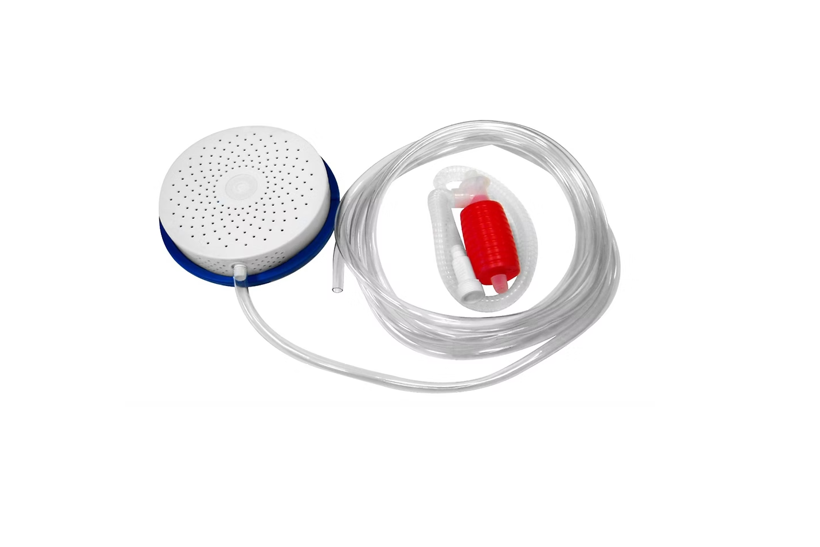
The FibroPool pump is a smaller manual electric cover pump. It is more focused on ordinary winter cover water and includes a 16 ft hose and 16 ft power cord.
The FOTING 1HP is the stronger utility pump. It can move more water, but it is less cover-specific and needs more care.
Choose FibroPool if you want a compact manual pump for standing water on a winter cover.
Choose FOTING if you want more power for larger utility draining jobs.
FOTING 1HP vs Blue Wave Siphon Pump
The Blue Wave siphon pump is the simplest non-electric option. It is best for light water on a winter cover and does not need power.
The FOTING is the opposite. It is electric, powerful, and much faster, but it needs a safe outlet and active monitoring.
Choose Blue Wave if you want the cheapest power-free option.
Choose FOTING if you need faster, higher-volume water removal.
What Should You Use With a Utility Pump?
A utility pump can move water, but it does not replace a proper winterizing setup.
For winter cover care, you may still need a solid winter cover, pool pillow, leaf net, winterizing kit, skimmer plug, or dedicated pool cover pump.
The FOTING is best treated as a backup or heavy-water tool. It can be very useful when you need stronger water removal, but it should not be the only thing protecting your pool during winter.
Is the FOTING 1HP Submersible Sump Pump Worth It?
The FOTING 1HP Submersible Sump Pump is worth considering if you want a powerful utility pump for larger water-removal jobs around your pool and home.
It is not the first product I would recommend for light winter cover water. For that, the Little Giant, FibroPool, or Blue Wave siphon pump are more cover-focused options.
But if you want a stronger pump for heavier draining jobs, the FOTING has a clear role. The 1HP motor, high listed flow rate, hose adapter options, removable screen, and thermoplastic body make it a practical utility pump to keep around.
The key is using it for the right job. Treat it as a high-flow water-removal pump, not a set-and-forget pool cover pump.
Related Winterizing Guides
If you are using a submersible pump to remove water from your winter cover, these guides can help you compare other pump options and finish the rest of your closing setup:
More Cover Pump Guides
Complete Your Winter Cover Setup
FAQ
Is the FOTING 1HP pump a pool cover pump?
Not exactly. The FOTING 1HP is a submersible utility or sump pump. It can help with water-removal jobs around a pool, but it is not a dedicated automatic pool cover pump.
Can you use the FOTING 1HP pump on a winter pool cover?
You may be able to use it carefully for heavier water removal, but it is not my first choice for light winter cover water. Make sure the cover is properly supported, the pump sits safely, and you monitor it while it runs.
How much water can the FOTING 1HP pump move?
The FOTING 1HP pump is listed at up to 4600 GPH, or 76 GPM. Actual flow depends on hose size, hose length, lift height, and setup.
Is the FOTING 1HP pump automatic?
No. The FOTING 1HP pump is manual mode only. You plug it in to start and unplug it to stop.
Can the FOTING pump drain an above-ground pool?
It can be used for pool draining tasks, as long as it is set up safely and used according to the pump and pool instructions. Always drain water to a suitable area away from the pool and foundation.
What hose size does the FOTING pump use?
The pump includes multiple hose connection options, including a 1-1/2 inch NPT discharge and garden hose adapter options. Using a larger hose can help maintain better flow.
Does the FOTING pump have a removable screen?
Yes. The pump has a removable bottom screen, which helps with cleaning and maintenance.
Can you leave the FOTING pump running unattended?
No. This is a manual electric pump, so you should monitor it while it runs and unplug it when the job is finished.
Is FOTING better than a dedicated pool cover pump?
It depends on the job. FOTING is better for larger water-removal tasks. A dedicated pool cover pump is usually better for routine winter cover water because it is designed specifically for that purpose.
Is the FOTING 1HP sump pump worth buying?
It is worth considering if you need a powerful utility pump for pool draining, heavy water removal, or other household water jobs. For light winter cover water, a dedicated pool cover pump or siphon pump may be a better fit.


Comments