
Best Pool Cover Pumps for Above-Ground Pool Winter Covers

If you use a solid winter cover on your above-ground pool, you need a plan for removing water from the top.
Rainwater and melted snow can collect on the cover during the off-season. A small amount of water can help keep the cover settled in windy weather, but too much water becomes a problem. It can pull the cover down, stretch the material, strain the cable, and put pressure on the pool wall.
That is where a pool cover pump comes in.
A good pool cover pump helps remove standing water before it gets too heavy. The right choice depends on how much water your cover collects, whether you want automatic operation, whether you have a safe outdoor outlet, and how hands-on you want to be.
In this guide, I’ll compare the best pool cover pumps for above-ground pool winter covers, including automatic, manual electric, non-electric siphon, and high-flow utility options.

Quick Verdict
The best pool cover pump for most above-ground pool owners is the Little Giant APCP-1700 because it offers automatic operation and a strong 1700 GPH flow rate. It is the best fit if your solid winter cover regularly collects water and you want less manual work.
If you want a lower-cost electric option, the FibroPool Pool Cover Pump is the better manual electric choice. It is not automatic, but it is compact, simple, and useful for occasional standing water.
If you want the cheapest power-free option, the Blue Wave Pool Cover Siphon Pump is the simplest choice. It does not need electricity, but it is slower and best for light water buildup.
If you need a powerful utility pump for larger draining jobs, the FOTING 1HP Submersible Sump Pump is the high-flow option. It is not a dedicated pool cover pump, but it can be useful for heavy water removal and pool draining tasks.
Best Short Answer
For most above-ground pool winter covers, choose an automatic pool cover pump if you want convenience, a manual electric pump if you want a cheaper powered option, a siphon pump if you want no electricity, and a high-flow utility pump if you need to move larger amounts of water quickly.
Best Pool Cover Pumps at a Glance
The important thing is choosing the right type of pump for the job. A pool cover pump is best for standing water on top of a solid winter cover. A utility pump is better for heavier draining jobs. A siphon pump is cheaper and power-free, but slower. An automatic pump is the most convenient if your cover collects water often.
Why You Need a Pool Cover Pump for an Above-Ground Pool
A solid winter pool cover does a useful job. It helps keep leaves, debris, sunlight, rain, and snow away from the pool water during the off-season.
But because it is solid, water can sit on top.
That water gets heavy quickly. If it is left there too long, it can pull the cover down into the pool, strain the cable or winch, stretch the cover material, and put pressure on the pool wall or frame.
This matters even more with above-ground pools because the wall and top rail are not designed to hold unlimited downward weight from a loaded cover.
A pool cover pump gives you a way to remove excess water before it becomes a bigger problem.
Important Tip: Your Winter Cover Still Needs Maintenance
A pool cover pump helps, but it does not mean you can ignore the cover all winter.
You should still check the cover after heavy rain, snow melt, wind, or leaf fall. Make sure the cover is sitting properly, the cable is secure, and water is not building up heavily in one spot.
If you use a pool pillow under the cover, standing water may collect closer to the outer edges rather than the center. Place the pump where the water is actually pooling.
If your pool is near trees, a leaf net can also make the job easier. Remove the leaf net and leaves first, then pump water from the solid cover underneath.
Best Automatic Pool Cover Pump: Little Giant APCP-1700

The Little Giant APCP-1700 is the best choice if you want an automatic pool cover pump for an above-ground winter cover.
Its biggest advantage is convenience. It turns on when water reaches about 2 inches and shuts off when the water level drops below about 1 inch. That means you do not have to manually switch the pump on and off every time water collects on the cover.
It also has a strong 1700 GPH flow rate at 1-foot lift, a 25 ft power cord, a 3/4 inch garden hose adapter, a built-in carry handle, and a removable intake screen.
This is the pump I would choose if your solid winter cover regularly collects rainwater or melted snow and you want less babysitting.
The main warning is freezing weather. The Little Giant APCP-1700 should be brought indoors when temperatures drop below freezing. It is designed to remove liquid water, not sit frozen in ice.
Best for:
Pool owners who want automatic operation.
Solid winter covers that collect water often.
Regular rain or melted snow.
Less manual monitoring.
Who should skip it:
Anyone wanting the cheapest option.
Pool owners without a safe outdoor power setup.
Anyone planning to leave the pump frozen outside all winter.
Best Manual Electric Pool Cover Pump: FibroPool Pool Cover Pump

The FibroPool Pool Cover Pump is the best manual electric option.
It is not automatic. You plug it in to start draining and unplug it when the water has been removed. That means it needs more attention than the Little Giant, but it is simpler and usually better suited to pool owners who only deal with occasional standing water.
The FibroPool pump uses a 75W motor and can move up to 10 gallons per minute, or about 600 gallons per hour. It also includes a 16 ft drain hose, 16 ft power cord, hose fittings, and a hose clamp.
This is a good middle-ground option. It is faster than a non-electric siphon pump, but not as hands-off as an automatic pump.
Best for:
Pool owners who check the cover after rain.
Light to moderate standing water.
A lower-cost electric option.
People who do not need automatic operation.
Who should skip it:
Anyone who wants automatic start and shutoff.
Covers that collect heavy water often.
Pool owners who do not want to monitor the pump.
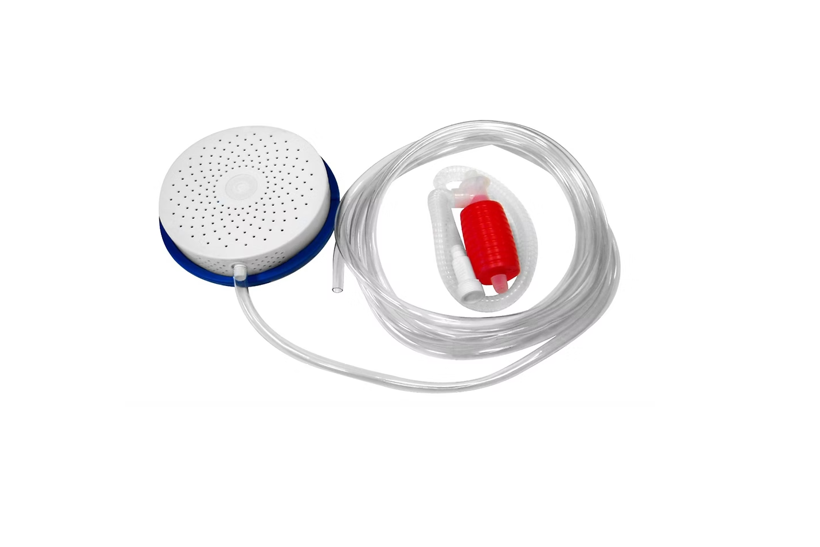
Best Non-Electric Option: Blue Wave Pool Cover Siphon Pump

The Blue Wave Pool Cover Siphon Pump is the best non-electric option.
It does not need electricity, batteries, an outlet, or a power cord. Instead, it uses a drain pad, 13 ft hose, and hand pump to start a siphon. Once the siphon starts, gravity helps drain water away from the cover.
This makes it a simple budget option if you only deal with light to moderate water buildup.
The trade-off is speed and placement. A siphon pump is slower than an electric pump, and the hose outlet needs to be lower than the water sitting on the cover. If your yard is flat or the drainage route is awkward, it may not work as well.
Best for:
Lowest-cost water removal.
No-electricity setups.
Light standing water.
Pool owners without a nearby outdoor outlet.
Who should skip it:
Anyone needing fast water removal.
Heavy cover water.
Awkward drainage areas where the hose cannot run downhill.
Pool owners who want automatic operation.
Best High-Flow Utility Option: FOTING 1HP Submersible Pump

The FOTING 1HP Submersible Sump Pump is the best high-flow utility option in this group.
This is not really a dedicated pool cover pump. It is a stronger utility pump designed for bigger water-removal jobs. It can be useful for pool draining, flooded areas, ponds, hot tubs, and heavier water removal around the pool.
The main reason to consider it is power. It has a listed maximum flow rate of up to 4600 GPH and a 1HP motor, which is far stronger than the smaller cover-specific pumps.
But that does not automatically make it the best choice for a winter cover. A high-flow utility pump needs careful placement and monitoring. I would not use it as the first choice for light cover water unless you are confident the cover is supported properly and the pump can sit safely.
Best for:
Larger water-removal jobs.
Pool draining tasks.
Utility use around the home and yard.
Pool owners who want a powerful backup pump.
Who should skip it:
Anyone wanting a dedicated cover pump.
Light standing water on a delicate cover.
Pool owners who want automatic operation.
Anyone who does not want to monitor a manual utility pump.
Automatic vs Manual vs Siphon Pool Cover Pumps
The best pool cover pump depends on how much water you deal with and how involved you want to be.
For most pool owners, the decision is simple.
Choose an automatic pool cover pump if your cover collects water often and you want less work.
Choose a manual electric cover pump if you only need occasional draining and do not mind monitoring it.
Choose a siphon pump if you want the cheapest non-electric option for light water.
Choose a utility pump if you need stronger water removal for bigger draining jobs.
How to Choose the Best Pool Cover Pump
Before buying, think about how your winter cover actually behaves.
If your cover only gets a little water after rain, a siphon pump or manual electric pump may be enough.
If water collects often, an automatic cover pump is usually worth the upgrade.
If you need to move large volumes of water quickly, a utility pump can help, but it should be treated differently from a dedicated pool cover pump.
Here are the main things to check.
1. How much water collects on your cover?
Light water buildup does not always need a powerful pump. A siphon pump or compact manual electric pump can work.
Heavy, frequent water buildup is different. If your cover regularly forms a deep low spot, an automatic cover pump is more convenient and safer for ongoing maintenance.
2. Do you have a safe outdoor power source?
Electric pumps need safe outdoor power. A GFCI-protected outlet is strongly recommended for outdoor water equipment.
If you do not have a suitable outlet, a non-electric siphon pump may be safer and simpler.
3. Do you want automatic operation?
Automatic operation is the biggest convenience upgrade.
A manual pump can work well, but you need to be there to plug it in, monitor it, and shut it off. If you want less hands-on maintenance, the Little Giant APCP-1700 is the strongest fit.
4. Where will the water drain?
Do not drain cover water toward the pool wall, deck, house foundation, patio, or anywhere it can freeze into a slip hazard.
Make sure the hose can reach a safe drainage area.
This is especially important with siphon pumps because the hose outlet needs to be lower than the water on the cover.
5. Will leaves clog the pump area?
If your pool sits near trees, wet leaves can block the pump area and slow down draining.
A leaf net can help. Remove the leaf net and leaves first, then pump water from the solid cover underneath.
What Should You Use With a Pool Cover Pump?
A pool cover pump solves one problem: standing water on top of a solid winter cover. It does not replace the rest of your winterizing setup.
For a stronger setup, you may also need:
A solid winter cover to protect the pool water.
A pool pillow to create a raised center point under the cover.
A leaf net to catch leaves before they become a wet mess.
A winterizing kit to treat the water before closing.
A skimmer plug or winter plate to protect the skimmer.
Stretch wrap or cover clips if wind is a problem.
The cover pump handles water removal. The other accessories help protect the pool, cover, water, and fittings through the off-season.
Are Pool Cover Pumps Worth It?
A pool cover pump is worth buying if you use a solid winter cover and water collects on top.
For above-ground pools, this is more than just convenience. Excess water can become heavy, pull on the cover, and put stress on the pool wall and frame. Removing water during the off-season helps reduce that risk.
The best option depends on your budget and how much work you want to do.
If you want the easiest setup, choose an automatic pump.
If you want a cheaper electric option, choose a manual cover pump.
If you want no electricity, choose a siphon pump.
If you need major water removal, choose a utility pump.
For most above-ground pool owners with a solid winter cover, some kind of cover pump is a smart winterizing accessory.
Final Verdict
The Little Giant APCP-1700 is the best overall pool cover pump for most above-ground pool winter covers because it offers automatic operation, strong water removal, and less manual monitoring.
The FibroPool Pool Cover Pump is the best manual electric option if you want a simpler, lower-cost pump and do not mind plugging it in and unplugging it yourself.
The Blue Wave Pool Cover Siphon Pump is the best non-electric option if you want a cheap, power-free way to remove light standing water.
The FOTING 1HP Submersible Pump is the best high-flow utility option if you need more power for larger draining jobs, but it is not the first choice for routine winter cover water.
If you are unsure, start with your cover-water problem. The more often your cover collects water, the more an automatic pump makes sense.
Related Winterizing Guides
Full Cover Pump Reviews
More Winterizing Guides
FAQ
What is the best pool cover pump for an above-ground pool?
The best pool cover pump for most above-ground pool winter covers is an automatic pump like the Little Giant APCP-1700. It is best if your solid winter cover regularly collects water and you want less manual monitoring.
Do you need a pool cover pump for an above-ground pool?
You may need a pool cover pump if you use a solid winter cover and water collects on top. Too much standing water can become heavy and put stress on the cover, cable, pool wall, and frame.
What is the difference between an automatic and manual pool cover pump?
An automatic cover pump turns itself on and off when water reaches certain levels. A manual cover pump needs you to plug it in, monitor it, and shut it off when the water has been removed.
Is a siphon pump good for pool covers?
A siphon pump can be good for light standing water on pool covers. It is cheap and does not need electricity, but it is slower than an electric pump and needs a downhill drainage path.
Can you use a sump pump on a pool cover?
You can use a sump or utility pump carefully in some situations, especially for heavier water removal, but it is not always the best choice for routine winter cover water. A dedicated cover pump is usually better for normal cover maintenance.
Should you leave a pool cover pump outside all winter?
No. Most electric pool cover pumps should be removed and brought indoors before freezing temperatures. They are designed to move liquid water, not sit frozen in ice.
Where should you place a pool cover pump?
Place the pump where water actually collects on the cover. If you use a pool pillow, water may collect closer to the outer edges instead of the center.
Can a pool cover pump remove snow?
No. A pool cover pump removes liquid water, not snow or ice. After snow melts into water, the pump can help remove it if conditions are above freezing and the pump is used safely.
Is a manual cover pump enough?
A manual cover pump may be enough if your cover only collects water occasionally and you do not mind monitoring it. If water builds up often, an automatic pump is usually more convenient.
What should you use with a pool cover pump?
A pool cover pump works best with a proper winterizing setup, including a solid winter cover, pool pillow, leaf net, winterizing kit, skimmer protection, and regular off-season checks.
Comments