
HTH Pool Shock Advanced Review: Cal-Hypo Shock for Clearer Pool Water


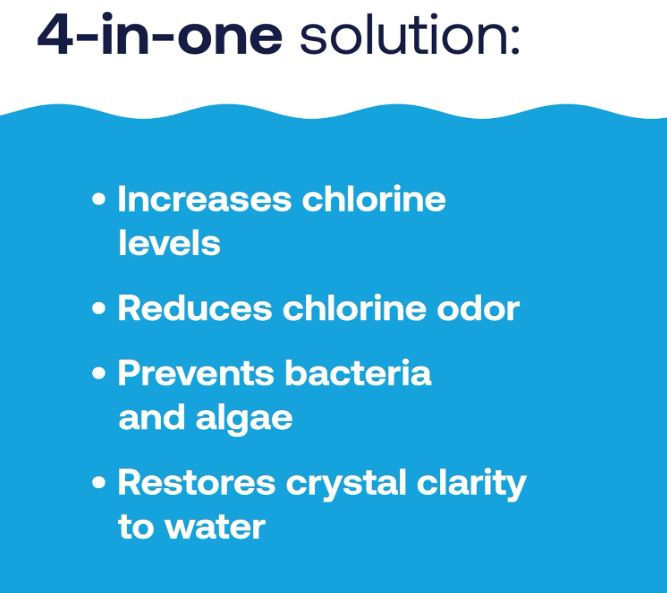
HTH Pool Shock Advanced is a calcium hypochlorite pool shock designed to raise chlorine quickly, help kill bacteria, fight algae, reduce chlorine odor, and restore cloudy pool water. It is most useful for pool owners who want a simple weekly shock treatment or a fast chlorine boost after heavy swimming, rain, heat, or early signs of algae.
This is not the same as chlorine tablets. Tablets are better for slow, steady maintenance. HTH Pool Shock Advanced is better when your pool needs a stronger chlorine reset.
Quick verdict
HTH Pool Shock Advanced is a good choice if you want a convenient cal-hypo pool shock for weekly maintenance, cloudy water recovery, or early algae control. The 1 lb bags are easy to dose for many home pools, and the formula gives you unstabilized chlorine, which means it does not add cyanuric acid to the water.
The main thing to watch is calcium hardness. Because this is a calcium hypochlorite shock, repeated use can raise calcium levels over time. That is not always a problem, but it is something to monitor, especially if your water is already hard.
Best for: Pool owners who want a strong weekly shock for clear water, algae prevention, and fast chlorine correction.
Skip it if: Your calcium hardness is already high, you prefer liquid chlorine, or you want a slow-release maintenance sanitizer like chlorine tablets.
Specs at a glance
In simple terms, HTH Pool Shock Advanced is a cal-hypo granular shock sold as a 12-pack of 1 lb bags. It is best for weekly shocking, fast chlorine boosts, cloudy water support, and early algae prevention, but regular use can raise calcium hardness over time.
What is HTH Pool Shock Advanced?
HTH Pool Shock Advanced is a granular pool shock made for routine pool sanitation and problem-solving. This version comes as a 12-pack of 1 lb shock bags, which makes it easy to keep multiple weekly treatments on hand during the pool season.
Its main role is to raise chlorine levels quickly. That makes it useful when your water starts looking dull, cloudy, or slightly green, or when your pool has been used heavily and needs a stronger sanitizer boost.

Because it is a cal-hypo shock, it adds chlorine without adding stabilizer. That can be a major advantage if your cyanuric acid level is already high from using stabilized chlorine tablets or dichlor shock.
What HTH Pool Shock Advanced does well
HTH Pool Shock Advanced is best viewed as a weekly maintenance shock for above-ground pool owners who want a simple way to raise chlorine, fight bacteria and algae, reduce chlorine odor, and help restore clearer water. It is not the only chemical you may need for every water problem, but it is a practical option when your pool needs a stronger chlorine boost than regular tablets can provide.
Fast chlorine boost
The biggest reason to choose HTH Pool Shock Advanced is speed. When your pool needs a stronger chlorine increase than tablets can provide, a shock product like this is the more practical option.
This makes it useful after:
Heavy swimming
Hot sunny weather
Rain or storms
Early algae signs
Cloudy or dull water
Low chlorine test results
Weekly maintenance when your pool needs a reset
For above-ground pool owners, this is especially useful because smaller pumps and filters can struggle if sanitizer levels drop too low for too long.
Cal-hypo formula with no added stabilizer
HTH Pool Shock Advanced uses calcium hypochlorite, often called cal-hypo. The important benefit is that it does not add cyanuric acid.
That matters because too much stabilizer can make chlorine less effective. If your pool has been maintained mostly with chlorine tablets, your stabilizer level may already be climbing.
In that situation, using a non-stabilized shock can make more sense than adding more stabilized chlorine.
The trade-off is calcium. Cal-hypo can raise calcium hardness over time, so you should test your water regularly.
Useful for cloudy water and early algae
HTH Pool Shock Advanced can help clear cloudy water when the cloudiness is caused by low chlorine, organic contamination, or early algae growth. It works best when you also brush the pool, clean the filter, and keep the pump running.
Do not treat shock as a magic fix for every cloudy pool. If your filter is dirty, your pH is too high, or your water is badly unbalanced, shock alone may not solve the problem.
If your pool stays cloudy after shocking, the issue may be filtration, pH, dead algae, or suspended particles. Our guide to clear cloudy pool water explains what to check before adding more chemicals.
Convenient 1 lb bags
The 1 lb bag format is one of the most practical features. You do not need to measure from a large bucket every time you shock the pool, and the bags are easy to store when kept dry and sealed.
This is useful for pool owners who want a simple weekly routine rather than constantly guessing how much product to use.
How to use HTH Pool Shock Advanced
Always follow the product label first. Pool shock is a strong chemical, and dosing can vary depending on your pool size, water condition, and product instructions.
Step 1: Test your water first
Before shocking, test your free chlorine, pH, alkalinity, and stabilizer level. Shocking blindly is one of the easiest ways to waste chemicals or make water problems worse.
If you do not know your pool volume, use our Pool Volume Calculator before dosing.
Step 2: Balance the pH
Shock works best when your pH is in the correct range. If pH is too high, chlorine becomes less effective. If pH is too low, the water can become uncomfortable and potentially more corrosive.
For many pools, a practical pH target before shocking is around 7.2–7.6.
Step 3: Add the shock according to the label
Use the label instructions for your pool size and water condition. Some pool owners broadcast granular shock around the pool while the pump is running, while some products or situations may require pre-dissolving.
Never mix pool shock with other chemicals. Never add water to chemical; if pre-dissolving is required, add the chemical to a bucket of water according to the label directions.
Step 4: Run the pump and brush the pool
Keep the pump running after adding shock so the chlorine circulates properly. Brush the floor, walls, corners, ladder area, and seams to help loosen algae, dirt, and organic buildup.
This is especially important if your water is cloudy or slightly green.
Step 5: Wait and retest before swimming
Do not swim immediately after shocking. Test the water and wait until free chlorine returns to a safe swimming range according to your test kit and product label.
If the water is still cloudy after shocking, clean or backwash the filter and give the pool more circulation time.
HTH Pool Shock Advanced vs liquid chlorine vs chlorine tablets
HTH Pool Shock Advanced, liquid chlorine, and chlorine tablets do different jobs. The mistake is treating them as interchangeable.
HTH Pool Shock Advanced is best for occasional or weekly shock treatment. Liquid chlorine is also excellent for fast chlorine increases, but it is heavier to store and loses strength over time. Chlorine tablets are best for slow, steady maintenance, not fast cleanup.
For most above-ground pool owners, the best setup is not one product forever. It is usually tablets or another maintenance sanitizer for routine chlorination, plus shock when the pool needs a stronger correction.
Who should buy HTH Pool Shock Advanced?
Choose HTH Pool Shock Advanced if you want a convenient weekly shock that can help keep pool water clearer and reduce the chance of algae taking hold.
It is a good fit if:
You want a stronger chlorine boost than tablets provide
Your pool sometimes turns dull or cloudy
You want a non-stabilized shock option
You already use tablets and want to avoid adding even more stabilizer
You prefer pre-portioned 1 lb bags
You want a practical shock for routine above-ground pool care
It is especially useful during peak swimming season when heat, sunlight, rain, and heavy use can quickly reduce chlorine levels.
If your pool is already green, do not rely on one shock dose alone. Follow our full guide to clear a green above-ground pool so you know when to test, brush, shock, filter, and vacuum.
Who should skip it?
Skip HTH Pool Shock Advanced if your calcium hardness is already high or if your pool tends to struggle with scale. Because this is a cal-hypo product, repeated use can add calcium to the water.
You may also want to skip it if you prefer liquid chlorine, want a product that dissolves instantly, or need a slow-release sanitizer for everyday maintenance.
If your main issue is long-term chlorination, compare it with chlorine tablets. If your main issue is green water, read our guide on how to clear a green above-ground pool before relying on shock alone.
Common mistakes to avoid
Pool shock is simple to use, but small mistakes can waste chemicals, irritate swimmers, or make water problems worse. These are the main mistakes to avoid before adding HTH Pool Shock Advanced.
Do not shock without testing the water first.
Do not add shock during the hottest part of the day unless the label specifically allows it.
Do not mix shock with other pool chemicals.
Do not assume cloudy water always means you need more shock.
Do not swim until chlorine is back within a safe range.
Do not ignore calcium hardness if you use cal-hypo regularly.
Do not store shock near liquids, acids, tablets, or other chemicals.
These mistakes are common, and they can lead to wasted product, liner damage, cloudy water, or unsafe handling.
If you are still deciding what your pool needs, these guides can help:
👉 Pool Shock 101 — learn when to shock your pool, how shock works, and how to avoid common dosing mistakes.
👉 Liquid Chlorine vs Chlorine Tablets — compare fast chlorine correction with slow weekly maintenance.
👉 How to Clear a Green Above-Ground Pool — use this if your pool has visible algae or green water.
👉 How to Clear Cloudy Pool Water — use this if your pool looks dull, hazy, or milky after shocking.
👉 Pool Volume Calculator — calculate your gallons before adding shock or chlorine.
👉 Chemicals & Water Care — compare more pool chemical guides and product reviews.
FAQ: HTH Pool Shock Advanced
Is HTH Pool Shock Advanced good for above-ground pools?
Yes, HTH Pool Shock Advanced can be used for above-ground pools when you follow the product label directions. It is useful for weekly shocking, cloudy water support, early algae control, and raising chlorine quickly after heavy pool use.
What type of shock is HTH Pool Shock Advanced?
HTH Pool Shock Advanced is a calcium hypochlorite shock, often called cal-hypo. It adds chlorine without adding cyanuric acid, but it can raise calcium hardness over time.
Does HTH Pool Shock Advanced add stabilizer?
No, cal-hypo shock does not add cyanuric acid stabilizer. That can be helpful if your stabilizer level is already high from using chlorine tablets or stabilized shock.
Can HTH Pool Shock Advanced clear cloudy pool water?
It can help clear cloudy water when the cloudiness is caused by low chlorine, organic waste, or early algae. If the water stays cloudy, check pH, filtration, circulation, and filter cleanliness before adding more chemicals.
Can I swim after using HTH Pool Shock Advanced?
Do not swim immediately after adding pool shock. Wait until the product has circulated and your test kit shows that free chlorine has returned to a safe swimming range according to the label instructions.
Is HTH Pool Shock Advanced better than liquid chlorine?
Neither is always better. HTH Pool Shock Advanced is convenient and easy to store in 1 lb bags, while liquid chlorine works quickly without adding calcium or stabilizer. If your calcium hardness is already high, liquid chlorine may be the better option.
Can I use HTH Pool Shock Advanced with chlorine tablets?
Yes, many pool owners use tablets for steady maintenance and shock for occasional chlorine boosts. Just do not mix chemicals together directly, and always test your water so stabilizer and calcium levels do not get too high.
Final verdict
HTH Pool Shock Advanced is a strong, practical choice if you want a convenient cal-hypo pool shock for weekly maintenance, cloudy water support, and early algae prevention. It is not a replacement for testing, brushing, filtration, or balanced water, but it can be a useful part of a simple above-ground pool care routine.
The biggest reason to pause is calcium hardness. If your water is already high in calcium, compare it with a liquid chlorine shock option before making cal-hypo your main shock product.
The biggest reason to pause is calcium hardness. If your water is already high in calcium, compare it with liquid chlorine before making it your main shock product.


Comments